US Universities Depend on International Students
Falling international enrolment exposes how deeply US public universities have come to rely on tuition fees paid by overseas students.

The decline in public funding led American universities to seek revenue from international tuition fees. Falling international enrolment now exposes the fragility of a model that enabled institutions to expand while making them more financially dependent on students from abroad.
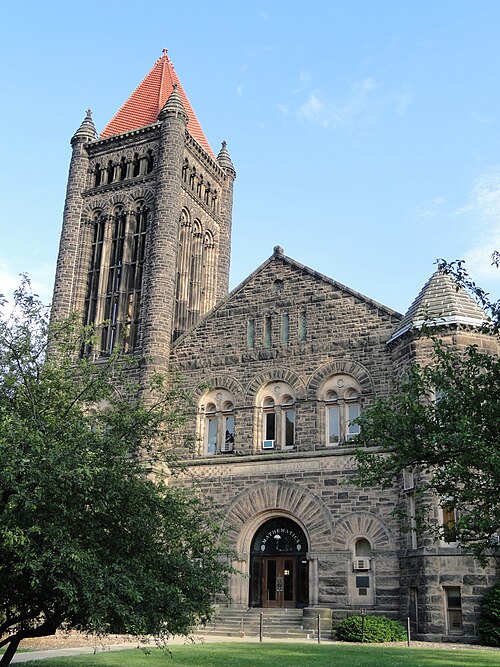
The University of Illinois recorded a fall of 1,254 international fee-paying students at its Urbana-Champaign campus in autumn 2026 compared with the previous year. The decline came at an institution that had spent decades investing in international recruitment and had come to rely on a substantial share of the revenue generated by these enrolments.
The campus had 12,913 international fee-paying students, according to enrolment figures released by the university. The number of full-time international students fell by approximately 9% compared with 2025, while enrolment of international master's students declined by 23%.
These results contrast with the performance of the University of Illinois system as a whole, where total student numbers exceeded 102,000, supported by increased admissions of state residents.
The contradiction is only apparent. Not all enrolments generate the same revenue, and an increase in student numbers can coexist with a reduction in available resources. At the University of Illinois, the difference between tuition charged to residents and to international students has become particularly important to the operation of certain programmes and academic units.
How international tuition became part of public university funding
American public universities draw on several sources of funding, including state appropriations, tuition fees, research contracts and other institutional revenue. The relative importance of each component varies according to the university and the political decisions made over time.
In Illinois, state funding for public universities fell by a cumulative 46% from 2000, according to figures presented in the material on the state's higher education system. Over the same period, tuition and fees charged to students more than doubled.
The reduction in public contributions compelled institutions to seek alternative revenue to finance academic activities, infrastructure and services. One such alternative was to recruit international students, who generally do not qualify for the tuition arrangements offered to state residents.
At the University of Illinois, international students pay between $42,000 and $53,000 a year in tuition and fees, more than twice the amount charged to residents, according to the figures presented. This difference means that losing one international student can result in a revenue shortfall greater than that offset by admitting one local student.
The issue is not simply one of filling places. It concerns the financial composition of enrolment and universities' capacity to meet the costs of their programmes.
Illinois's expansion and the transformation of its revenue
The University of Illinois Urbana-Champaign developed a particularly substantial international presence. By 2012, the campus already had more than 8,000 international students and was then described as the American public university with the largest international student population.
This growth took place during a period when American institutions were seeking to attract applicants from overseas and demand for higher education abroad was rising among Asian families, including those in China.
The expansion had consequences beyond academic life. Higher enrolment enabled institutions to diversify their revenue, support programmes and strengthen their presence in international education markets.
Yet when a university becomes financially dependent on a group of students subject to immigration rules, diplomatic relations and political decisions outside its control, it also becomes particularly exposed to those factors.
The University of Illinois recognised the risk before the most recent restrictions. In 2017, it took out an insurance policy through Lloyd's of London to protect up to $60 million in tuition revenue against a sudden decline in enrolment by Chinese students. The policy ran for three years.
During the pandemic, the university claimed under the policy and received $24 million, according to an academic report on its strategy for protecting international tuition revenue. The payment helped offset budgetary losses in business and engineering.
The institution was subsequently unable to renew the coverage, leaving it without that particular financial safeguard. The policy illustrates the economic significance of international tuition. The university regarded a potential fall in enrolment as a financial risk substantial enough to justify specialist insurance.
Why more local admissions do not make up the shortfall
The 2026 figures show that a university can admit more students and still face financial difficulties arising from declining international enrolment. Increasing the number of state residents expands access to higher education for people living in Illinois. It does not, however, necessarily generate revenue equivalent to that of international students.
The University of Illinois administration explained this difference in a communication to federal authorities, noting that domestic students do not pay the same tuition fees as international students.
This structure creates tension between two public objectives. On the one hand, the university must provide educational opportunities to residents of the state that contributes to its funding. On the other, it seeks sufficient revenue to sustain its academic programmes and the quality of its services.
Recruiting international students can serve the second objective, but it does not automatically replace a stable public funding policy. Nor does a reduction in international enrolment necessarily lead to a corresponding increase in opportunities for domestic students.
Admissions capacity depends on facilities, academic staff, demand for individual programmes and academic decisions. Replacing lost revenue also involves a timing problem. Operating costs may remain unchanged throughout the academic year even when lower enrolment immediately reduces an institution's income.
The economic impact extends beyond campus
The presence of international students has economic consequences beyond tuition fees. Students require housing, food, transport and other goods and services. Their spending supports demand in the communities where they study.
In the Champaign-Urbana area, the cited estimates indicate an annual economic contribution of approximately $659.3 million associated with international students and support for more than 6,000 jobs.
These figures are estimates of economic impact, not revenue received directly by the university. The distinction matters because declining enrolment can affect both an institution's finances and the businesses and services in its surrounding community.
The effects also differ according to an institution's size and financial position. A large research university with multiple sources of income and established demand may have greater capacity to adapt than a regional institution with fewer resources.
In Illinois, some smaller universities face difficulties associated with falling enrolment and prolonged reductions in state investment. Western Illinois University, in Macomb, is one example of an institution whose financial difficulties also affect the local economy.
The problem is especially significant at institutions that serve students from lower-income families and rural communities. In these circumstances, cuts to academic services and higher attendance costs can undermine precisely the educational opportunities that a public university is meant to provide.
Immigration restrictions as a budgetary risk
Changes proposed by the American administration to visas and the permitted length of stay for international students added uncertainty to universities' financial planning. During 2025 and 2026, measures were announced that included limits on the duration of stays and restrictions affecting certain categories of international students. Some proposals faced legal challenges.
The University of Illinois joined opposition to measures it considered harmful to academic operations and student recruitment. Charles Isbell Jr., the leader of the Urbana-Champaign campus, warned about the consequences of declining international demand and presented data on falling applications, including a 50% drop in international postgraduate applications at the Chicago campus.
Universities must plan faculty recruitment, course provision and investment in advance. When the rules governing entry and residence become unpredictable, uncertainty can influence applicants' decisions even before a restriction takes legal effect.
An announced change, a proposed regulation and a legally enforceable measure are not equivalent. All three, however, can affect expectations and financial decisions.
In November 2026, court rulings blocked federal administration initiatives concerning international students' residence and new charges associated with certain authorisations. Those decisions changed the immediate legal position of the contested proposals, but they did not automatically restore enrolments already lost or applications that had never been submitted.
Funding according to institutional need
Debate over the future of Illinois public universities also concerns the distribution of state funding. In 2026, a legislative proposal designated H.B. 1581 envisaged an annual increase of $135 million in higher education funding over fifteen years.
The model sought to distribute resources according to institutional needs, taking account of students' circumstances and inequalities among institutions. Its objectives included improving support for rural populations and groups with fewer educational opportunities.
The proposal encountered opposition from the University of Illinois, whose share of state funding would fall under the proposed distribution formula. The disagreement illustrates a structural difficulty in public higher education policy.
Larger institutions may seek to preserve the resources needed to maintain their operations, while less well-funded universities argue for allocations that take existing inequalities into account. A distribution formula cannot be determined solely by student numbers.
Students' socioeconomic backgrounds, programme costs, regional responsibilities and institutions' ability to generate their own income can all affect their financial needs.
A model exposed to international demand
The Illinois experience shows how dependence on international tuition can emerge gradually as universities seek to compensate for declining public contributions. When enrolment grows, the model allows institutions to increase revenue and support academic activities.
When demand falls, the same structure exposes institutions to losses that are not necessarily offset by domestic enrolment. The decline at Urbana-Champaign in 2026 offers a concrete example of this vulnerability.
The figures establish a fall in international enrolment, but do not, on their own, show that all the losses resulted from immigration policies. Demand also depends on costs, economic conditions and alternative educational opportunities in other countries.
The future finances of universities will depend on the balance between public funding, tuition revenue, institutional adaptability and changes in applications. Illinois helps explain why access for international students is no longer merely a question of academic internationalisation. At institutions that have made these enrolments a substantial part of their funding, it has also become a condition of budgetary stability.