Presidential conflicts of interest
Can a presidency become a source of family wealth?
Holding public office creates opportunities for influence that are unavailable to other citizens. Democracy must prevent that influence from becoming a source of private financial advantage.
Presidential conflicts of interest
In October 2026, an American opinion poll recorded a finding that was difficult to ignore: 66 per cent of respondents believed that Donald Trump was using the presidency to enrich himself. In September 2025, the figure had been 56 per cent. The increase does not constitute evidence of unlawful conduct. Opinion polls measure public perceptions; they do not establish criminal liability. But they reveal a serious political problem.
When such a substantial proportion of the population believes that the head of state is deriving financial benefits from holding office, confidence in presidential decisions becomes vulnerable. Any contract, appointment, diplomatic meeting or economic initiative may come to be viewed in the light of possible private interests. The President may make a legitimate decision and still face questions about the reasons behind it. It is precisely to reduce this ambiguity that democracies need rigorous rules on conflicts of interest.
The problem of owning businesses while governing
A businessperson who takes on political responsibilities does not automatically cease to have commercial interests. Nor does that person become guilty of wrongdoing simply because their private business activities continue to generate revenue. The problem lies in the possibility that public decisions may directly affect the value of those interests.

A President exercises powers that affect taxation, regulation, international trade relations, public contracts and investment policies. Some of those decisions may benefit businesses connected to the President or members of the President's family. Even where there is no evidence of deliberate favouritism, overlapping interests can undermine public confidence. Citizens need to know that a decision has been taken in the public interest, rather than to increase the profitability of a private enterprise.
The difficulty grows when business structures are complex and involve companies, investors or intermediaries with international connections. The formal transparency of a transaction does not necessarily reveal all the relationships of dependence it creates.
Money can buy access without buying a decision
One of the most difficult forms of political influence does not involve an explicit exchange of money for favours. It involves establishing close relationships. A businessperson may seek opportunities to attend events frequented by political officeholders. A foreign investor may consider it advantageous to establish commercial relationships with companies associated with people close to the Government. An organisation may direct resources towards businesses that provide opportunities to cultivate relationships within particular circles of power.
None of these situations automatically constitutes a crime. However, when financial advantage and political access become linked, a legitimate question arises about equal treatment. Ordinary citizens should not have to depend on their ability to establish commercial relationships with the families of those in government to obtain an administrative decision. The democratic principle requires that access to public services and decisions should not be conditional on such connections.
Presidential conflicts of interest: The presidential family is not an institution of the state
The relatives of a political leader retain their private rights. They may pursue careers, manage assets and engage in business activities within the law. But the prominence acquired through the exercise of public office creates particular problems.
Presidential conflicts of interest: - The boundary between personal identity and institutional authority can become blurred. A private transaction may benefit from political prestige without any formal government decision being involved. The use of symbols, relationships or opportunities associated with the presidency may confer commercial advantages that are difficult to assess. Ethical rules should therefore not be confined to acts directly authorised by the holder of the office. They must also take account of situations in which people close to the President may act as points of contact between private interests and public authority.
The existence of a family relationship does not prove favouritism. But neither does it make the investigation of potential conflicts of interest illegitimate.
Trust cannot depend on the character of the person in power
The problem extends beyond Donald Trump. A political system should not depend on the belief that a particular President is personally honest. It needs institutions capable of scrutinising the exercise of presidential powers, regardless of who holds office.
Rules governing financial disclosures, political funding, gifts, public procurement and disqualification from decision-making must follow consistent principles. The same conduct cannot be considered acceptable when it benefits a political ally and intolerable when it involves an opponent. Selective scrutiny is insufficient to protect the integrity of institutions.
It is also necessary to distinguish three aspects that political debate frequently confuses. The first concerns legality: whether particular conduct breaches legal rules. The second concerns public ethics: whether a conflict of interest exists that is incompatible with the requirements of office, even where no unlawful conduct has been established. The third concerns political trust: how citizens interpret the conduct of those who govern them. The three are related, but they are not equivalent.
The public interest cannot become an extension of private wealth
Presidential authority belongs to the state. Its exercise is temporarily entrusted to an elected individual under constitutional rules. That person may have personal ideas, convictions and interests. Nevertheless, the power entrusted to them does not become private property. This distinction is one of the fundamental principles of democratic government.
When the business activities of a governing family become too closely connected with the functions of the state, it becomes harder to ensure that this boundary remains intact. The response should not be to presume that crimes have been committed. It should be to demand sufficient transparency for decisions to be examined without relying exclusively on the assurances of those concerned.
A strong democracy does not need to place blind faith in the virtue of its leaders. It needs to ensure that the exercise of power can be scrutinised. The presidency is not a business. And the right to govern does not include the right to turn the state into an instrument of family enrichment.
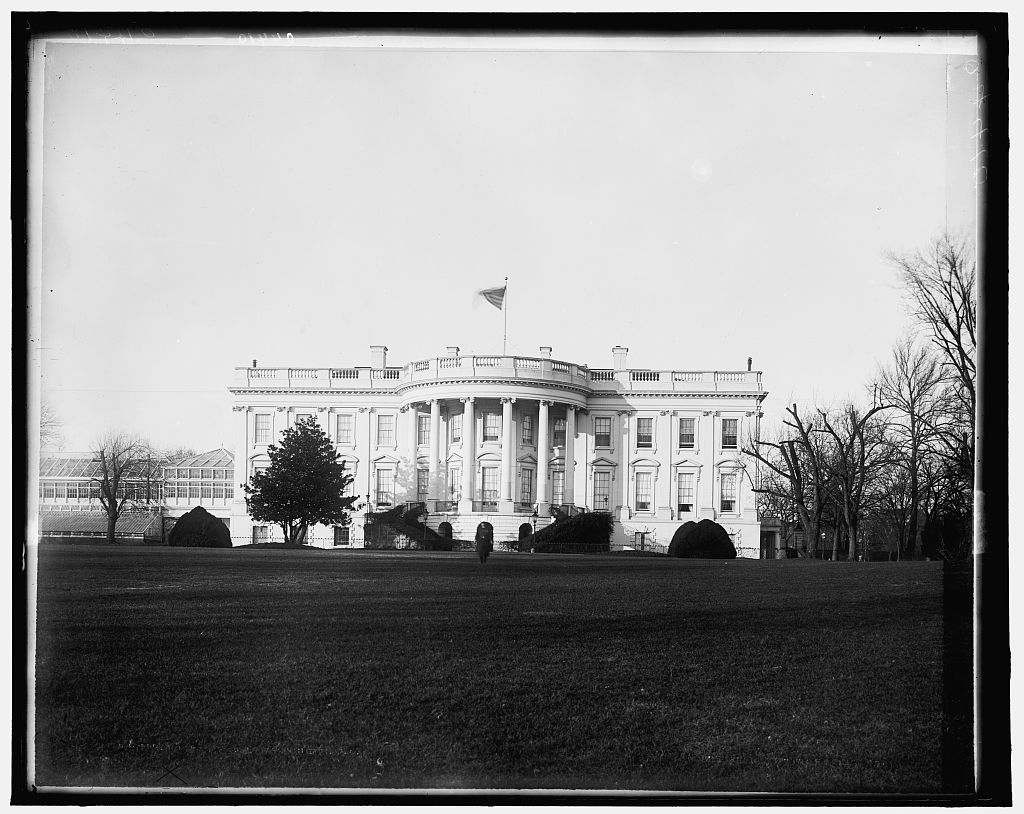
Cover photograph: The White House, Washington, D.C., photographed by William Henry Jackson between 1880 and 1897. This is a historical image, not a photograph of the present administration. Library of Congress, Detroit Publishing Company Collection, LC-DIG-det-4a03951. No known restrictions on publication.