Artificial Intelligence Is Already Worth More Than It Promises
AI valuations are soaring as data centres, investment and public power reshape economies. The consequences for Portugal will depend on choices made beyond the markets.
The financial enthusiasm surrounding artificial intelligence is turning technology companies into centres of economic and political power. From Wall Street to Portugal, the question is no longer simply what machines will be able to do. It is who will benefit from that transformation and who will bear its costs.
There is a particular kind of wealth that begins by existing almost entirely in the future. Investors hand over money today in return for a promise that may materialise five, ten or twenty years from now. In the meantime, factories are built, engineers hired, land purchased, electricity consumed and forecasts prepared to justify the value assigned to something that has not yet happened.
The economy has always lived, to some extent, on such anticipation. What distinguishes the present expansion of artificial intelligence is the extraordinary financial scale of its expectations and the range of human activities it is intended to transform.
On Thursday, 19 November 2026, Anthropic, the American company behind the Claude system, made its stock-market debut. The offering raised around $81 billion and gave it an initial valuation of approximately $1.5 trillion. During trading, investor enthusiasm briefly brought its market value close to $2 trillion.
Figures on this scale make it difficult to distinguish a company's price from the confidence invested in the future it announces.
Anthropic does not merely sell software. It develops systems that promise to perform complex intellectual tasks, accelerate scientific research and take part in processes that, until recently, depended almost entirely on people.
The company also acknowledges in its financial documents that the technology could have serious consequences, including risks it describes as potentially catastrophic or existential.
The market has agreed to finance, at the same time, the promise of extraordinary prosperity and the development of systems whose risks the company itself admits it does not fully understand.
This combination says a great deal about the age in which we live.
Money that arrives before the results
A technology company's valuation does not correspond to the money it holds in the bank or to the physical value of its equipment.
It results from an estimate of its future capacity to generate revenue and profit, influenced by investors' expectations, financial conditions and confidence in the company's competitive position.
In traditional businesses, such assessments may be supported by decades of results, established customers and relatively familiar markets. In advanced artificial intelligence, an important part of the value attributed to companies depends on transformations that are still taking shape.
Today's systems have already proved useful in numerous activities. They produce computer code, assist in analysing documents, conduct research and perform some tasks with increasing autonomy.
But there is a considerable distance between carrying out those operations and reorganising the world economy.
The more ambitious promise is to develop systems able to participate in scientific research, medicine, engineering, administration and industrial production, profoundly changing the cost and speed of work.
Some of these transformations may bring real and substantial gains. It is also possible that certain applications will prove less profitable, harder to integrate or more expensive than investors anticipate.
The financial problem arises when the price assigned to companies assumes that much of the most favourable outlook will ultimately come true.
At that point, a forecast ceases to serve merely as guidance for investment and begins to carry the weight of an economic obligation.
The infrastructure must be built, customers secured, growth maintained and results produced to justify the sums invested.
Even an extraordinarily useful technology can become a poor investment if the price paid anticipates benefits greater than those it can deliver.
The factory nobody sees
Artificial intelligence is often presented as an almost weightless experience.
A user types a question into a computer or phone and receives an answer. The operation seems to take place in a distant space, almost without physical substance.
Behind that ease of use lies an industrial infrastructure on a vast scale.
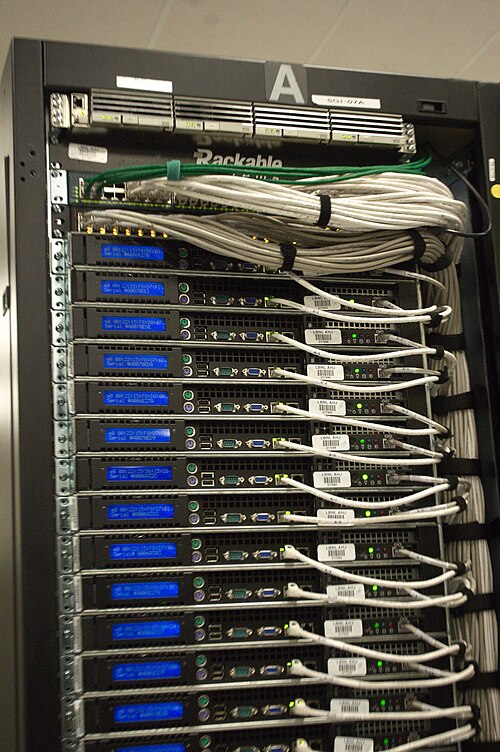
The systems depend on advanced semiconductors, processing facilities, communication networks, cooling equipment and a continuous electricity supply.
The greater the capabilities required, the more important the availability of these resources becomes.
It is at this point that artificial intelligence ceases to be solely a concern of companies developing models and begins to involve land, energy and public decisions.
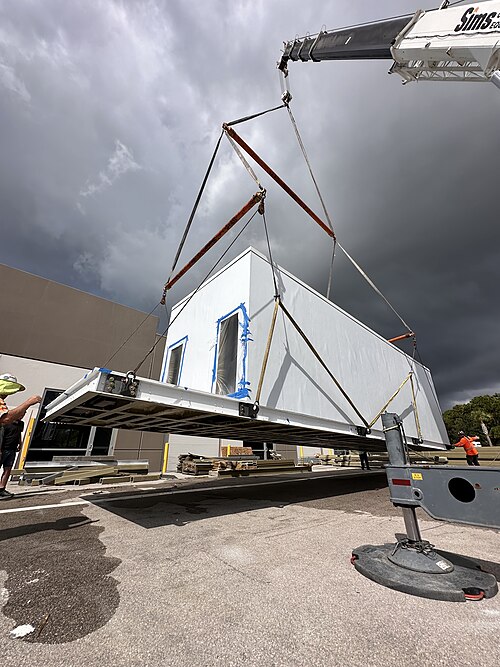
Data centres occupy physical space, require connections to electricity grids and must secure operating conditions that do not depend solely on the quality of their software.
The expansion of these facilities can create economic activity, attract investment and strengthen the strategic position of particular regions.
It also creates infrastructure requirements that must be assessed alongside other demands on available resources.
A society can benefit from hosting a major processing centre without owning the technology used inside it. It can provide electricity, land and international connections while remaining dependent on decisions taken by companies based in other countries.
That distinction will be decisive in understanding Portugal's place in the new economy.
Portugal enters the geography of artificial intelligence
In Sines, where the industrial landscape was shaped for decades by energy, the port and large production facilities, a new activity associated with data processing is developing.
Start Campus plans a complex with an announced capacity of 1.2 gigawatts, distributed across several facilities. The first building was inaugurated in April 2025.
The scale of the investment is significant for the country. Its Atlantic location, international communications links and availability of energy are important arguments for attracting technology operators.
The Portuguese government has also approved a National Data Centres Plan, with measures intended to develop the sector during 2026 and 2027.
Portugal wants to make use of its geographical and energy position to participate in an industry seeking new locations for high-capacity facilities.
But the size of an investment does not automatically answer the question of national benefit.
A data centre may represent billions of euros of investment and require a relatively limited workforce once construction has been completed.
It may attract specialised services and create opportunities for Portuguese businesses, but the extent of those opportunities depends on contracts, supply chains and the ability of domestic institutions to participate in higher-value activities.
It is also important to determine how much of the wealth generated will remain in the country and what costs will be borne by national infrastructure.
Intensive electricity use requires decisions about grid capacity, new sources of generation and supply conditions.
The availability of renewable energy is a potential advantage, but it does not remove the need to assess the impact of consumption or ensure that industrial development is compatible with the needs of communities and other economic activities.
The debate in Portugal already includes proposals for stricter rules on data centres' energy and water consumption.
The question is not to decide in advance that these facilities are desirable or harmful. It is to understand the specific conditions under which the investment will take place and the results it may produce.
Portugal does not need to reject digital infrastructure. It needs to avoid confusing the hosting of that infrastructure with mastery of the technology it serves.
The difference between receiving investment and creating knowledge
Portugal's ambitions extend beyond data centres.
The National Artificial Intelligence Agenda, approved in January 2026, seeks to develop the use of this technology in the economy, strengthen skills and create conditions for research and innovation.
The intention is understandable. A country that remains distant from new tools may lose opportunities for productivity and scientific development.
Yet purchasing technological systems, using them and developing capabilities of one's own are different activities.
A Portuguese company may improve certain processes by using tools produced abroad. That gain may be economically significant even if the company cannot build the systems it uses.
A university may conduct original research using international infrastructure. It may also help create knowledge that is subsequently applied by foreign organisations.
Technological autonomy does not require every country to manufacture every component it needs. But it depends on skills that allow it to understand, adapt, evaluate and, when necessary, replace essential technologies.
It is particularly important for Portugal to develop independent research and oversight capabilities.
The same system that makes a task faster can introduce errors, produce unsuitable results or create new forms of dependence.
Without professionals able to assess those limitations, technological adoption risks becoming a relationship in which the user accepts what they cannot verify.
The country has encountered this difficulty before.
For decades, modernisation often meant acquiring equipment manufactured elsewhere, in the hope that incorporating more efficient machines would bring the Portuguese economy closer to European productivity levels.
There was important progress. Problems nevertheless persisted concerning skills, business organisation and the capacity to turn investment into higher-value production.
Artificial intelligence may expand existing opportunities. It may also reproduce some of these limitations if economic policy concentrates on installing equipment and purchasing services.
Jobs will not disappear uniformly
Discussions of artificial intelligence and work are often organised around two predictions: the technology will destroy jobs, or it will create entirely new occupations and activities.
Economic experience suggests that transformations on this scale rarely produce effects so simple.
A profession consists of different tasks. Some can be automated, others may come to require supervision, and still others will continue to depend on human abilities that available systems cannot reproduce satisfactorily.
A lawyer can use artificial intelligence to organise documents without ceasing to be responsible for the legal interpretation they present.
A doctor can use tools supporting clinical analysis while retaining responsibility for decisions concerning the patient.
A journalist can accelerate documentary research and still need to verify information, understand events and answer for the content they publish.

Automating tasks can change the number of workers required for particular functions, the organisation of working time and the distribution of income.
The benefits will not necessarily go to the same people who bear the costs of the transition.
A company may increase productivity without wages rising at the same rate. A worker may use more efficient tools while facing even greater performance demands.
New activities may also emerge that have little economic significance today.
The difficulty lies in anticipating the pace of change and ensuring that people have the means to adapt.
In Portugal, this question has distinctive characteristics.
The economy still contains a large number of small and micro-enterprises, many of which face difficulties involving management, skills and investment in innovation.
Artificial intelligence may offer advantages to these organisations, but its use requires skills, reorganisation and investment capacity.
For a worker with specialised training, a new tool may offer an opportunity to undertake more complex tasks. For another, whose role consists chiefly of repetitive operations, the same technology may present an immediate threat to employment.
The inequality between these situations will not be resolved merely by making the systems commercially available.
It will also depend on education, lifelong training and decisions taken by companies and public institutions.
A private company with a mission for humanity
Anthropic describes itself as a company devoted to the responsible development of advanced artificial intelligence systems.
Its legal structure incorporates public-benefit objectives, seeking to reconcile commercial activity with commitments concerning the safety and consequences of the technology.
The importance of that formulation goes beyond corporate marketing.
The systems developed by leading artificial intelligence companies can influence the operation of public and private organisations, access to information and certain activities in scientific research.
The potential scale of those effects gives business decisions a significance rarely found in most commercial products.
A company may decide which systems to make available, on what terms to sell them and which restrictions to impose.
It may also establish research priorities that influence the technological capabilities available in subsequent years.
These choices are made by private organisations, even though their consequences may reach entire societies.
The existence of a public-benefit mission does not eliminate this concentration of power.
Nor does it mean that the interests of investors and those of the public will always coincide.
Shareholders may seek returns. A company may defend long-term investments that do not yet produce financial results. Public authorities may require limits or conditions that its management regards as harmful to its business.
The problem becomes more complex when the company itself recognises the possibility of developing systems whose risks it cannot fully anticipate.
Trust in the responsibility of its leaders may be necessary, but it cannot replace mechanisms of oversight, transparency and accountability.
Good intentions are not an institutional guarantee.
What the fall of a chief executive reveals
Jensen Huang's departure from the executive leadership of Nvidia, announced on 12 November, introduced another element of uncertainty into an industry that had for years associated much of its expansion with the abilities of a small group of business leaders.
Huang became a central figure in Nvidia's transformation into one of the leading suppliers of the semiconductors used to develop and run advanced artificial intelligence systems.
His departure followed revelations concerning personal relationships and questions about his conduct, at a time when the company was also facing scrutiny over security matters and international technological relations.
The event matters less for the interest it arouses in a business leader's private life than for the institutional exposure that can arise when decisions, political relationships and strategic authority are concentrated in one person.
A major technology company does not depend solely on its employees' technical expertise.
It also depends on the ability of its governing bodies to ensure continuity, manage conflicts of interest and retain the confidence of customers, partners and investors.
When an organisation acquires strategic significance, its internal problems can quickly reach beyond the corporate sphere.
In the semiconductor industry, business decisions can influence international supply chains, commercial relations and security policies.
The succession of a chief executive therefore becomes a matter of concern not only to shareholders, but also to the companies and states that depend on that technology.
The episode reminds us that the infrastructure of artificial intelligence, however sophisticated, continues to depend on human institutions, with all their vulnerabilities.
When enthusiasm meets reality
Major technological transformations inevitably attract predictions about the future.
Some come true, though often in ways different from those originally imagined. Others become excessive because they confuse the existence of an invention with the speed of its adoption and the scale of the economic benefits it may produce.
Artificial intelligence has already passed the stage at which it could be regarded as an experimental curiosity.
There are real applications, investments that have materialised and observable changes in professional activities.
The financial question is how much of the value attributed to companies corresponds to results they may achieve, and how much rests on expectations that are too ambitious.
A stock-market correction would not necessarily mean that the technology had failed. It might mean that investors had paid in advance more than the results justified.
Equally, a continued rise in share prices would not, in itself, demonstrate that the promised benefits for society were being realised.
Markets value financial opportunities. Social consequences demand other criteria.
In Portugal, this difference can be seen in the way investment in technology is discussed.
The announcement of a major project is often received as a sign of economic modernisation. Its financial value is impressive, its facilities promise to transform places, and the presence of international companies seems to herald new opportunities.
But the country's economic history counsels us also to look at what happens after the announcements.
We need to know how many jobs are created, what level of skills they require, what effect they have on local businesses, what costs they impose on infrastructure and whether they strengthen the ability to produce knowledge at home.
The assessment of an investment does not end when capital arrives. In many respects, that is where it begins.
A future that still belongs to people
Artificial intelligence will probably change numerous activities, but the extent of those changes cannot be measured solely by share prices or the processing power of systems.
Machines can produce information more quickly and carry out operations that once demanded many hours of human work.
Society will still have to decide how to use that capacity.
A university may use artificial intelligence to support research, but it must preserve standards of scientific quality.
A hospital may use decision-support systems, but it will continue to need professionals who are responsible for the care they provide.
A business may automate part of its work and will have to decide how to distribute the economic gains from that transformation.
In Portugal, these decisions will be made in a country seeking to improve productivity, retain qualified professionals and create conditions in which young people can find opportunities without necessarily having to emigrate.
Technology may contribute to these aims. It will not achieve them automatically.
Economic growth depends on how technical capabilities are integrated into institutions and human relationships.
Part of the extraordinary financial valuation of artificial intelligence arises from the belief that future systems will be able to perform tasks that still require people today.
But the value of a society cannot be determined exclusively by the number of tasks it can dispense with.
An economy that produces more with less work will have to find ways of distributing the gains in productivity. A public administration that uses more efficient systems will have to preserve responsibility for its decisions. An educational institution equipped with tools capable of answering almost every question will still have to teach its students how to understand those answers.
Investors can anticipate profits. Companies can build machines. Governments can develop programmes and fund infrastructure.
None of these developments settles in advance what will be done with the time, knowledge and wealth that the technology may release.
In Sines, the new data centres may become an important part of Portugal's economy. On Wall Street, company valuations will continue to fluctuate with expectations of growth. Where people work, study and live, the consequences will be less spectacular and probably more enduring.
The economic future of artificial intelligence has begun to be traded at extraordinary prices. How that future will be lived still depends on decisions that no stock-market valuation can make on our behalf.