Freemasonry: - These were the earliest Masonic "tracing boards"
In Freemasonry's early years, initiates encountered symbols drawn on floors or chalkboards in taverns and meeting rooms. New candidates would erase these drawings as proof of their oath of secrecy. Modern lodges now use printed boards and tapestries instead of hand-drawn symbols.
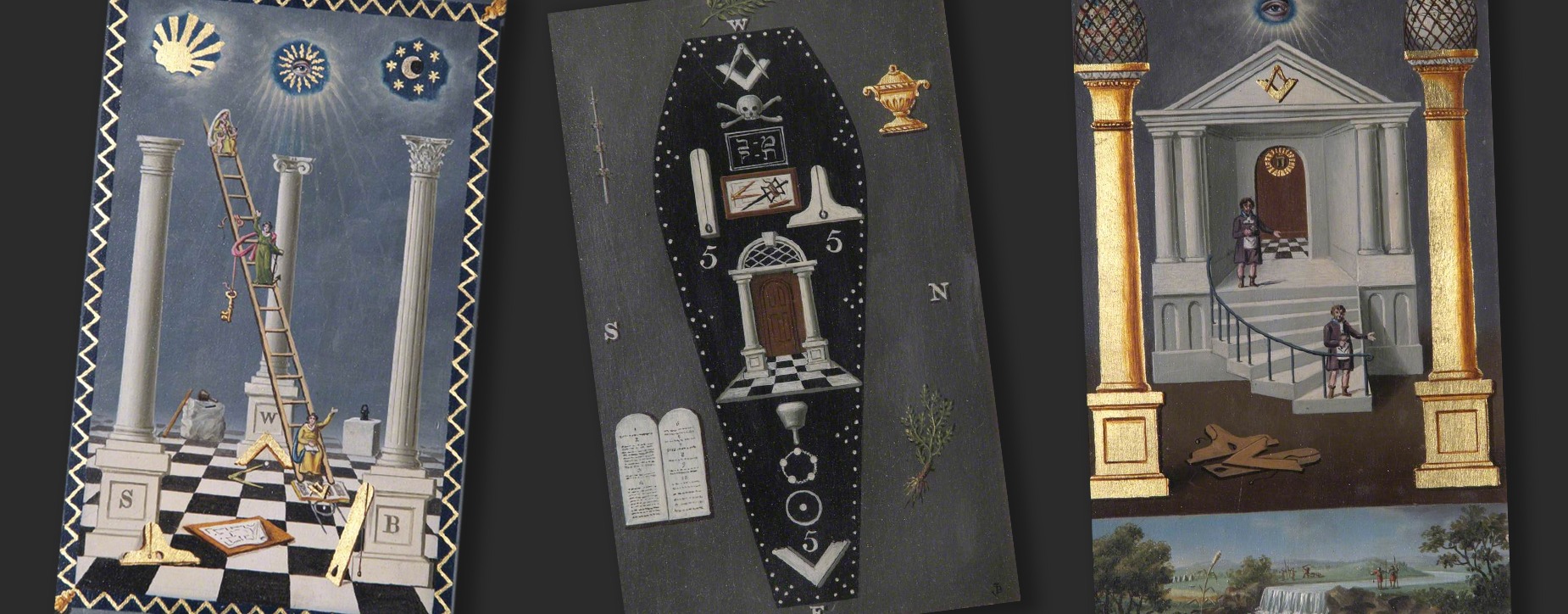
In the early days, when Freemasonry met in rooms that were not dedicated to the Craft (such as above restaurants or in taverns), the important symbols of initiation would have been drawn onto the floor or perhaps a small chalkboard.
These were the earliest Masonic "tracing boards."
In some instances, the Tyler would draw or set the boundaries. The Worshipful Master would fill in the symbolism.
If an initiation had taken place, the new candidate would be tasked with erasing the drawing (perhaps with a mop) as evidence of their oath of secrecy.
Today, most Masonic Lodges in the United States meet in dedicated rooms and utilize prints or tapestries in place of hand drawn symbols. Examples are shown here.
(Source: "The Evolution and Development of the Tracing or Lodge Board". Ars Quatuor Coronatorum. 1916; Image courtesy of Fine Art Restoration at fineart-restoration.co.uk)
@GLP